OVERCAST

Optical Variability Evaluation of Regional Cloud Asymmetries in Space and Time

OVERCAST

Global, multisensor 3D cloud analysis in near real-time


OVERCAST aims to provide an accurate estimate of time-resolved 3D cloud structures using global operational satellites, combined with a number of ancillary products, provided in near real-time. Please see the Science and Applications tab above for a description of our products.


    The project is sponsored by the US Office of Naval Research (ONR) and supports basic research, with additional civilian applications. The Cooperative Institute for Research in the Atmosphere (CIRA) partners include the Naval Research Lab (NRL) and the Cooperative Institute for Meteorological Satellite Studies (CIMMS).


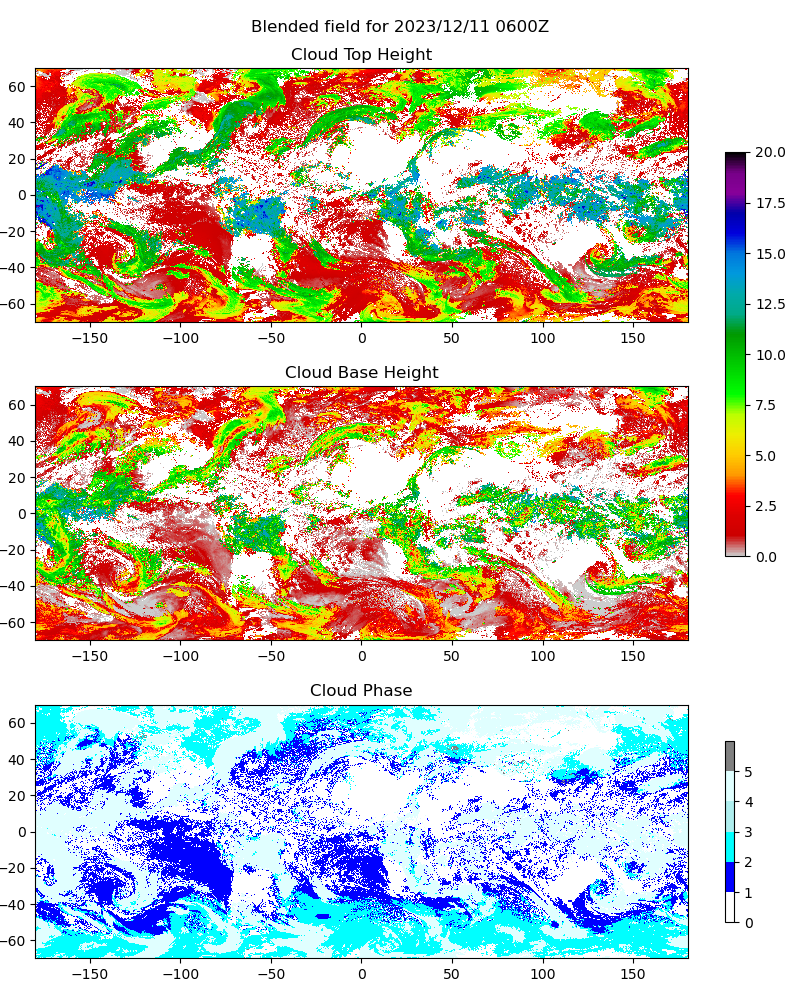
Global Vertical Cloud Structure

1 / 11

3D cloud structure information is important for a wide range of weather and climate studies....

Read More


Product Validation

2 / 11

The Clouds from AVHRR Extended (CLAVR-x) System is primarily used to do cloud retrievals....

Read More


Product Visualization

3 / 11

Current methods of visualizing satellite-derived data are largely two-dimensional....

Read More


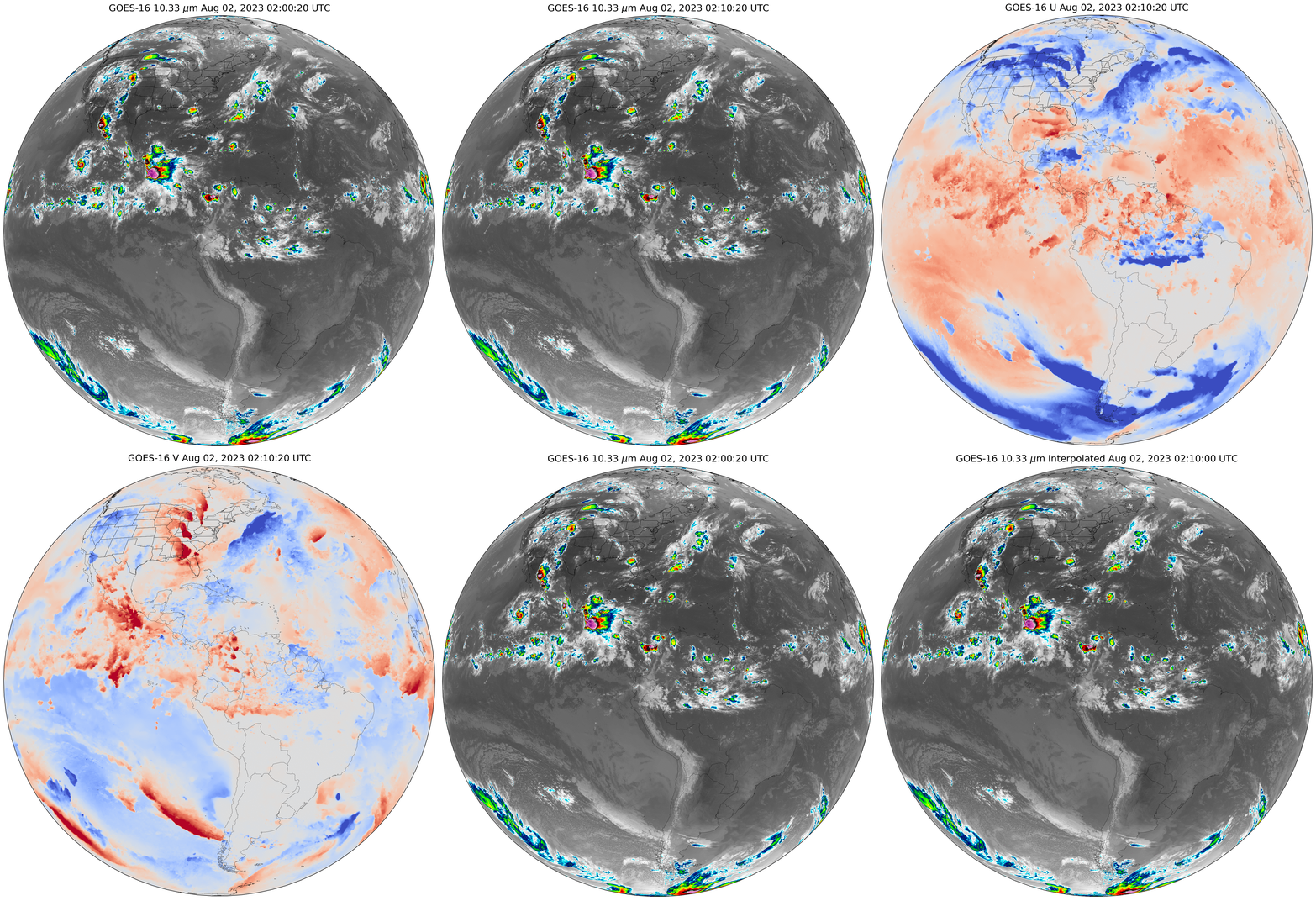
Optical Flow

4 / 11

Optical flow is defined as the distribution of velocities of brightness patterns in an image....

Read More


Deterministic Cloud-Free Line-Of-Sight (D-CFLOS)

5 / 11
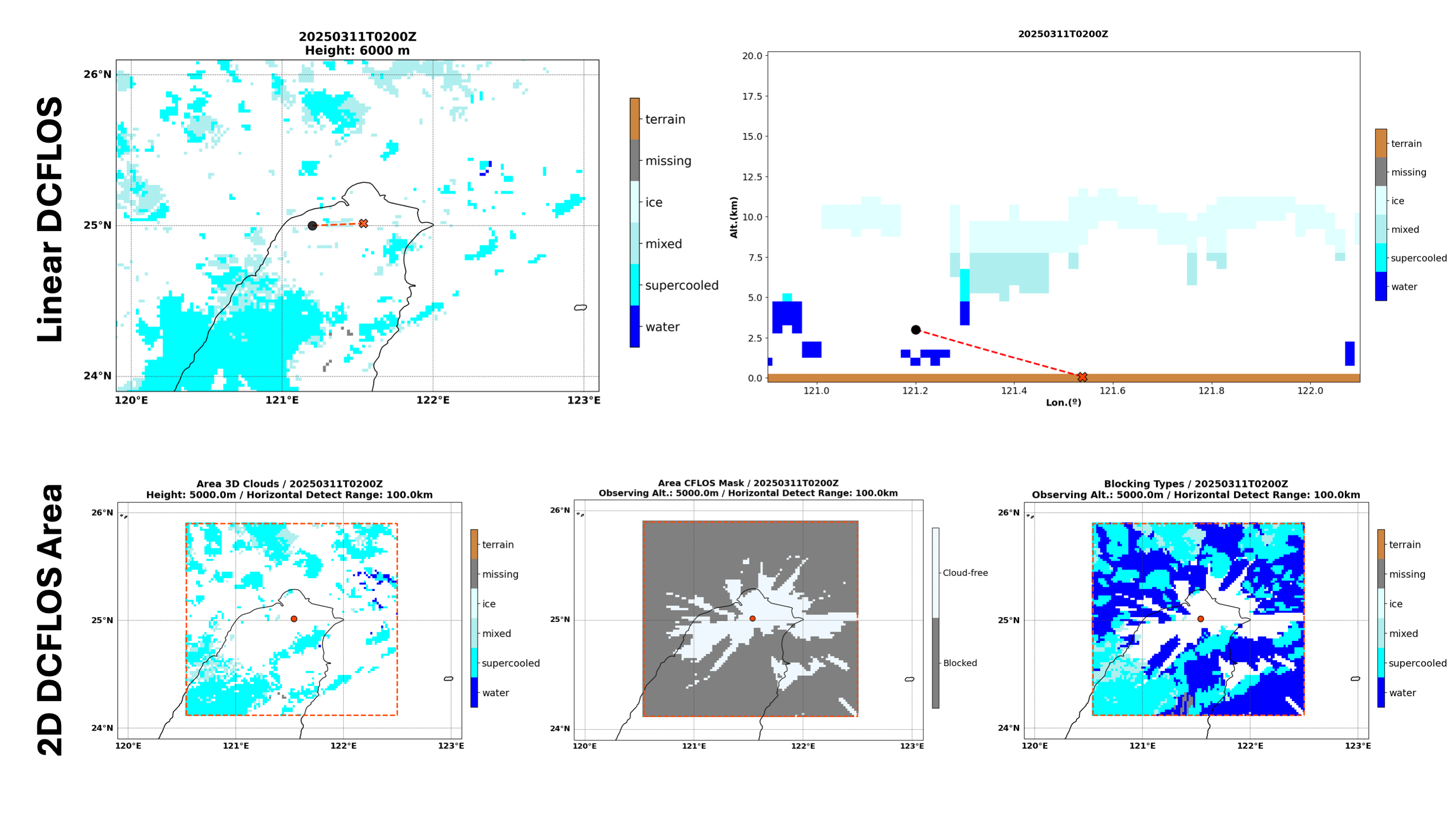
A Cloud-Free Line-Of-Sight (CFLOS) is an unobstructed line between two points in the sky, free from clouds or other visual barriers....

Read More


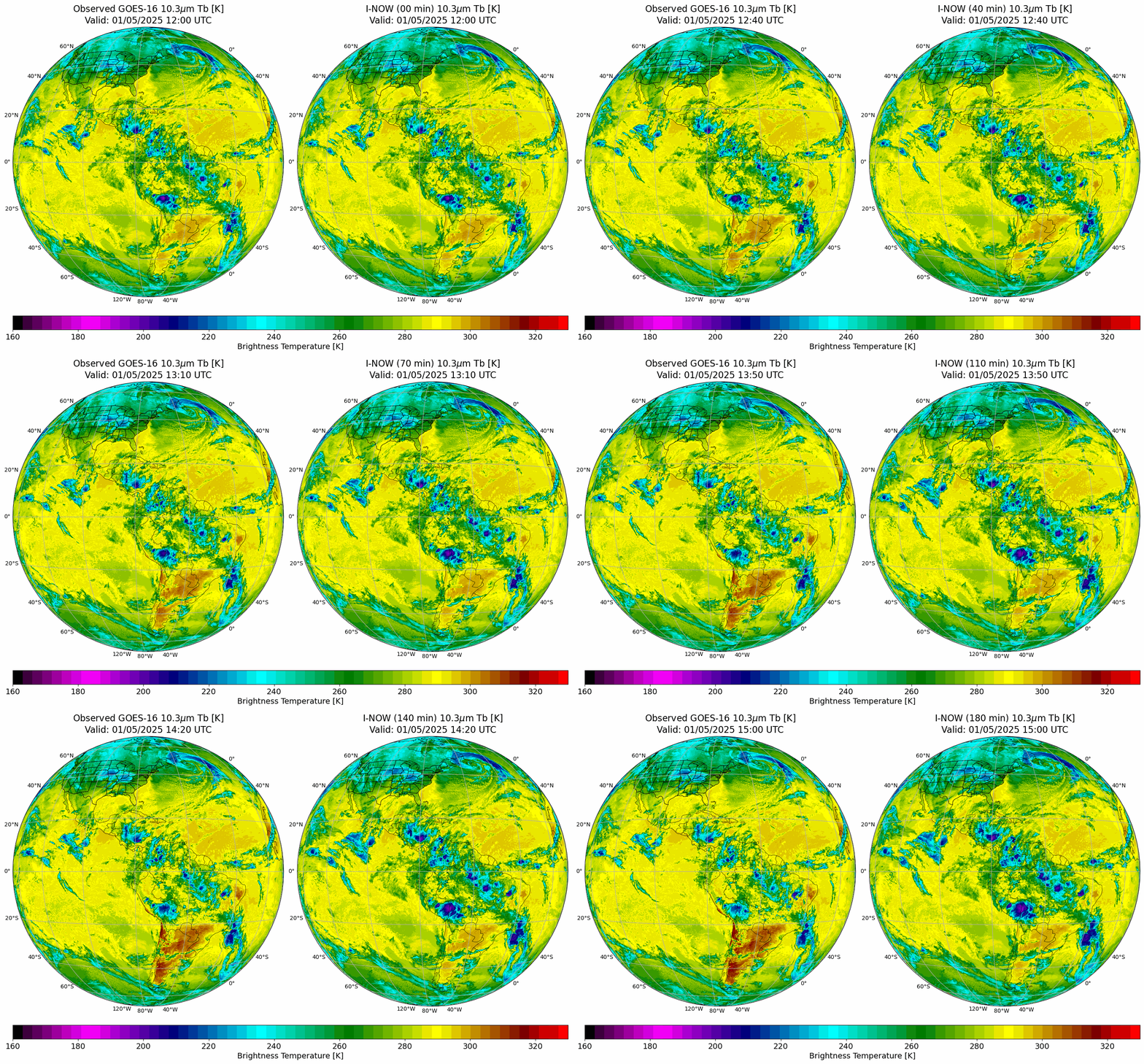
Nowcasting

6 / 11

Cloud and visibility nowcasting is important for operational users....

Read More


Cloud Water Vertical Distribution

7 / 11
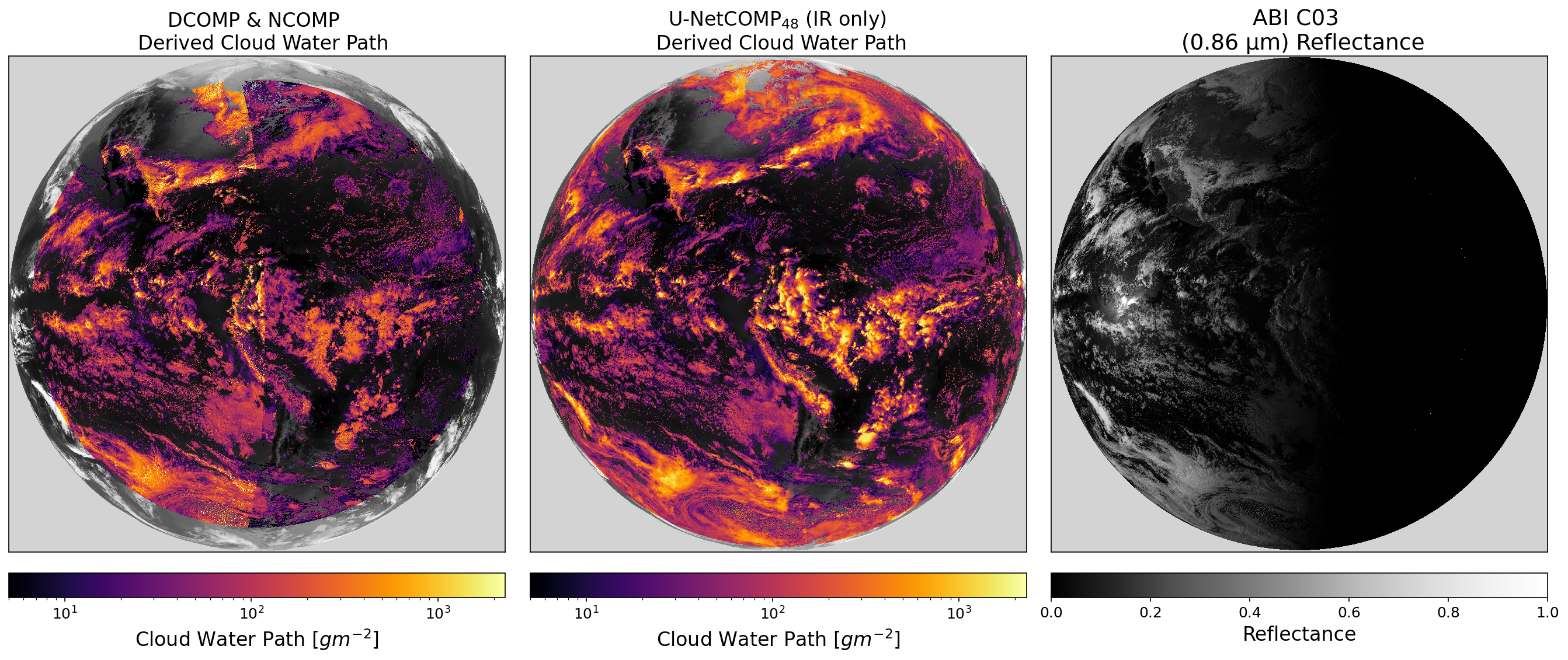
One critical component of characterizing clouds in the vertical dimension is estimating the vertical distribution of cloud water....

Read More


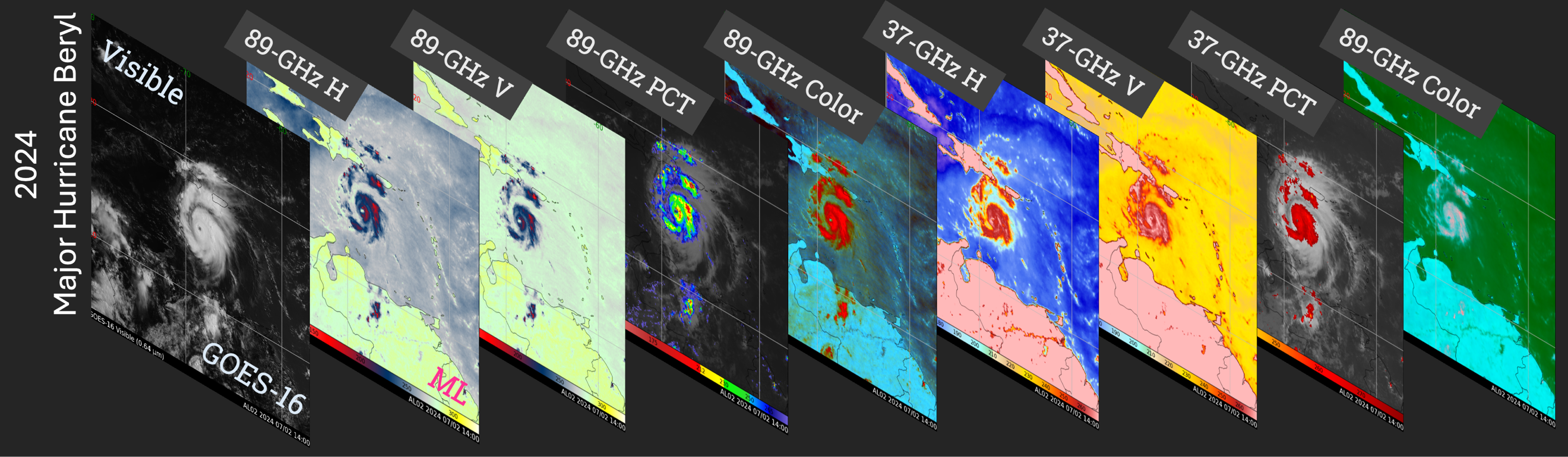
Passive Microwave

8 / 11

Passive microwave imagery displays information regarding deep convection, liquid water, and rainfall, providing a unique perspective of storm structure and organization....

Read More


GOES Radar Estimation via Machine Learning to Inform NWP (GREMLIN)

9 / 11
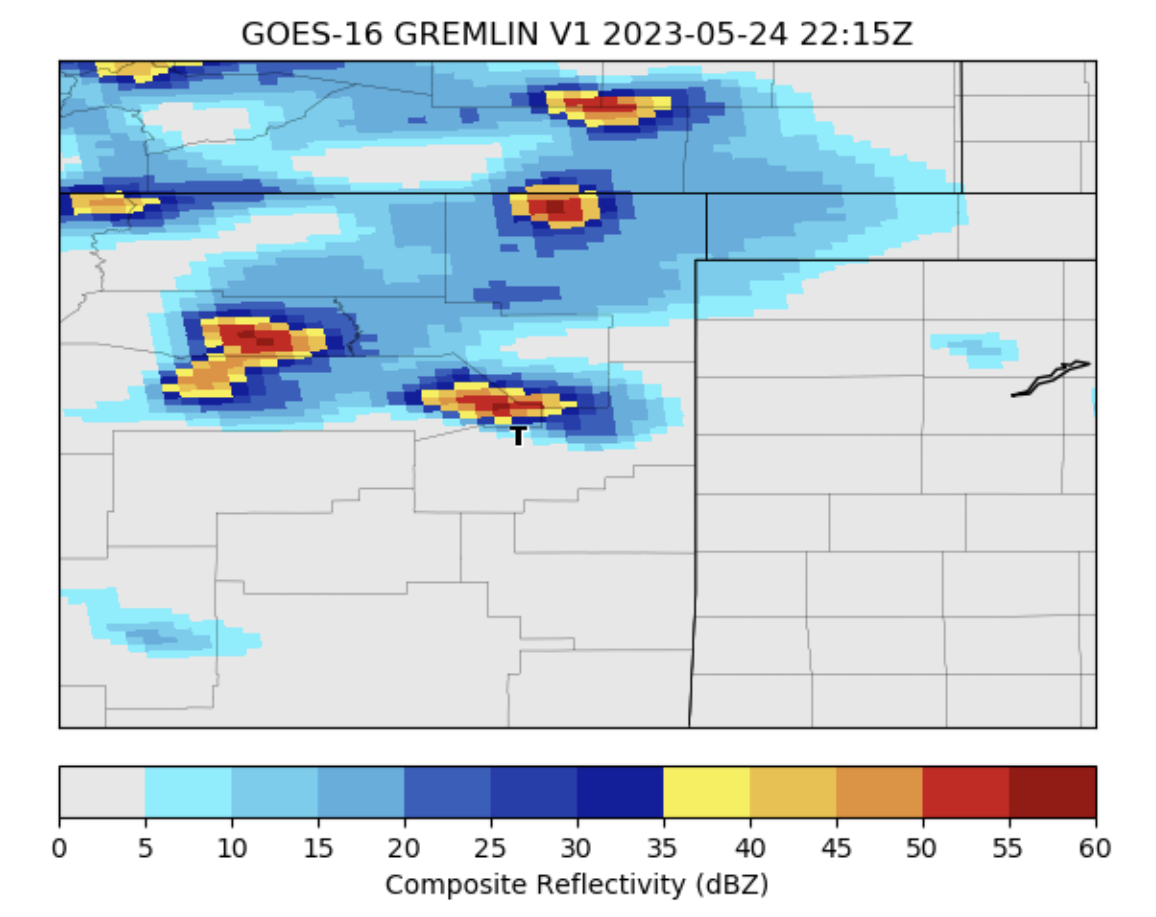
GREMLIN (GOES Radar Estimation via Machine Learning to Inform NWP) provides synthetic radar reflectivity fields....

Read More


Geolocated Information Processing System (GeoIPS)

10 / 11
The Geolocated Information Processing System (GeoIPS) will act as both a method of running each of the OVERCAST algorithms in a consistent manner....

Read More


Sensor Blending Algorithms

11 / 11

To achieve a smooth, accurate, and consistent global 3D field....

Read More